Generic
ISO 6892-1: what it is and how to perform tensile tests on metallic materials

13/09/2026
The mechanical properties of a metallic material are decisive for understanding its behaviour and assessing its suitability for the intended application. To measure them reliably and make results comparable, tests must be performed according to procedures defined and recognised internationally.
Among the main references for tensile testing of metallic materials is ISO 6892-1, the standard that specifies the method for testing at ambient temperature and the mechanical properties that can be determined through the test.
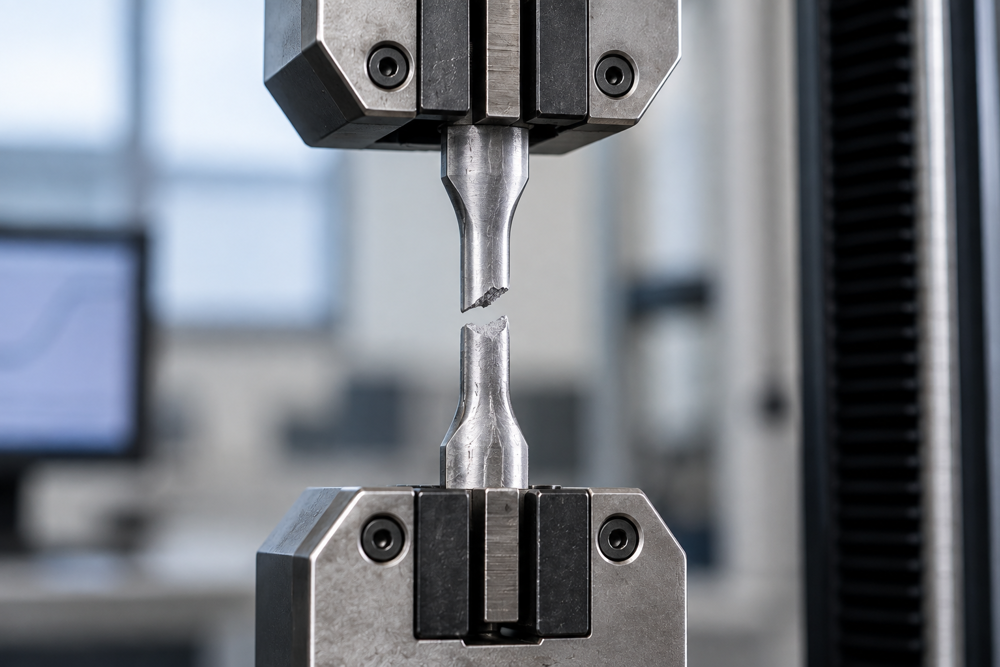
The test consists, in general terms, of subjecting a specimen to a controlled tensile load and recording its behaviour during the test. From the collected data it is possible to obtain essential information to characterise the material, including values related to yield, tensile strength and elongation. This makes the test central for quality control activities, material characterisation and verification of performance.
The currently applicable version is ISO 6892-1:2019, the third edition of the standard, published in November 2019. The standard underwent a systematic review and was confirmed in 2025, and therefore remains the current edition.
What ISO 6892-1 is
ISO 6892-1 is the international standard that specifies the method for performing tensile tests on metallic materials at ambient temperature and defines the mechanical properties that can be determined by the test. It is important to emphasise temperature because the ISO 6892 family also includes standards dedicated to testing under different thermal conditions.
The standard applies to different types of metallic products. Among those listed in Galdabini's technical documentation are sheets and plates, wires, bars or bar sections and tubes. Depending on the product tested, the specimen geometry and certain aspects of test execution vary.
Following a standardised method is essential to obtain reliable and comparable results. It is not sufficient to simply apply tensile load to a specimen: several elements that can influence the result must be controlled, from gripping and specimen alignment to the measurement of force and deformation.
What ISO 6892-1 specifies
The standard therefore defines a common framework for performing the tensile test. The specimen is correctly positioned and gripped in the testing machine and then subjected to tensile loading under the specified conditions until failure. During the test, the data required to determine the material's mechanical characteristics are acquired. ISO 6892-1 also contemplates two modes of test rate control, referred to as Method A and Method B.
Correct execution becomes particularly important when specimen shape and characteristics vary. A thin metal wire, for example, presents different gripping issues compared with a sheet; similarly, a tube may require specific measures due to diameter, wall thickness and geometry. For this reason the universal testing machine must be suitably configured with gripping systems and measurement instruments appropriate for the application.
Which mechanical properties it allows to determine
The tensile test makes it possible to observe how the material reacts while progressively loaded and to determine several mechanical properties. Among the values reported by Galdabini for tests according to ISO 6892-1 are those related to yield (Rp, ReH and ReL), tensile strength (Rm) and elongation (A and Agt).
These results enable a quantitative description of the material's behaviour under tensile loading and constitute important information for industrial and laboratory activities. The accuracy of the machine, the deformation measurement system and data acquisition therefore plays a fundamental role: the objective is not merely to bring the specimen to failure, but to obtain measurable, repeatable and interpretable data according to a shared method.
How a tensile test according to ISO 6892-1 is carried out
A tensile test according to ISO 6892-1 consists of subjecting a metallic specimen to an increasing and controlled tensile force, recording its behaviour up to the conditions specified by the test, typically until failure. During the test, the machine acquires the values necessary to determine the material's mechanical properties, correlating applied force with specimen deformation.
Correct execution, however, requires far more than simply applying a load. Specimen preparation and geometry, gripping system, alignment, measurement of force and deformation and control of the test rate can all affect result quality. For this reason ISO 6892-1 establishes a shared method aimed at making measurements reliable and comparable.
Specimen preparation and positioning
The starting point is the metal specimen to be tested. Its shape depends on the source product and the application: specimens can be obtained, for example, from plates, bars, wires or tubes. The specimen's characteristics also influence the configuration required to perform the test correctly.
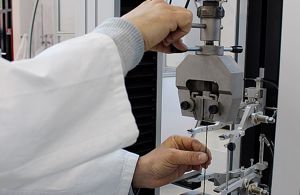
The specimen is then positioned in the machine and clamped using appropriate gripping systems. A particularly important aspect is its correct axial alignment, necessary to minimise bending effects that could alter the test results. The choice of grips and accessories must also be appropriate for the specimen's geometry and characteristics.
Application and control of tensile loading
Once the system is prepared, the machine progressively applies the tensile force. During this phase the material's behaviour changes as the load increases and the data required to determine its mechanical properties are acquired.
A relevant element of ISO 6892-1 concerns the control of the rate at which the test is conducted. The standard provides two modes, referred to as Method A and Method B. Method A is based on strain rate control, while Method B is based on stress rate control. The choice and correct management of the method are particularly important because the test rate can influence the values obtained for certain material properties.
Measurement of deformation
To understand the material's behaviour it is not enough to know the applied force: it is also necessary to measure how the specimen deforms during the test. This is where the extensometer comes into play, the instrument used to accurately detect dimensional changes of the specimen.
The most suitable technology may vary depending on the material and specimen geometry. In Galdabini applications dedicated to metallic wires, for example, different extensometry solutions are provided and, for particularly thin wires, a video extensometer can be used, allowing non-contact measurement.
Acquisition and processing of results
During the test, force and deformation are acquired and analysed to derive the expected mechanical properties. At this stage the machine system, the measurement instruments and the software must work in a coordinated manner: result reliability depends on the entire measurement chain and not on a single component.
The collected data therefore allow the determination of values such as yield, tensile strength and elongation, providing a quantitative description of the material's behaviour. In Galdabini solutions, the test software is used to programme and manage the test, monitor results and process and archive the acquired data.
The tensile test according to ISO 6892-1 thus becomes a complete process of controlled force application, deformation measurement and result analysis. A correct configuration of machine, accessories and measurement systems is essential to obtain reliable data consistent with the method required by the standard.
Which materials and products can be tested according to ISO 6892-1
ISO 6892-1 concerns tensile testing of metallic materials at ambient temperature and can be applied to specimens obtained from products with different characteristics and geometries. Sheets, bars, wires and tubes can therefore be tested, adopting a configuration appropriate to the specimen's characteristics.
Product geometry is an aspect not to be underestimated. The principle of the test remains that defined by the standard, but the manner in which the specimen is prepared, gripped and measured changes. For this reason a universal testing machine must be configurable with accessories and measurement systems appropriate for the specific application.
Sheets and metal plates
Sheets and plates represent one of the applications of the tensile test according to ISO 6892-1. A specimen is taken from the product, clamped in the machine and progressively subjected to tensile loading.
The test allows determination of mechanical properties important for characterising the material and verifying its behaviour, including values related to yield, tensile strength and elongation. This information is particularly relevant when the material's characteristics must be known and controlled before use in subsequent industrial processes.
Bars and sections
ISO 6892-1 can also be applied to bars and bar sections. In this case as well, correct specimen preparation and positioning are essential to avoid undesired stresses that may influence the results.
The machine configuration must be chosen taking into account the specimen characteristics, the required force and the properties to be determined. The availability of universal testing machines with different capacities therefore allows adapting the system to the size and mechanical characteristics of the material being tested.
Metal wires
Metal wires are a particularly interesting application because their geometry introduces specific requirements both for gripping and for deformation measurement. Galdabini provides a tailored application for tensile testing of metal wire according to ISO 6892-1, highlighting how different solutions may be necessary depending on specimen characteristics.
To prevent wire slippage during the test, specific gripping systems can be used. The choice of extensometer also depends on wire diameter and characteristics: for thinner specimens, Galdabini cites the possible use of a video extensometer, which allows deformation measurement without contact with the specimen.
Tubes and piping
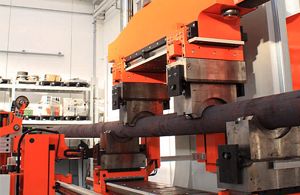
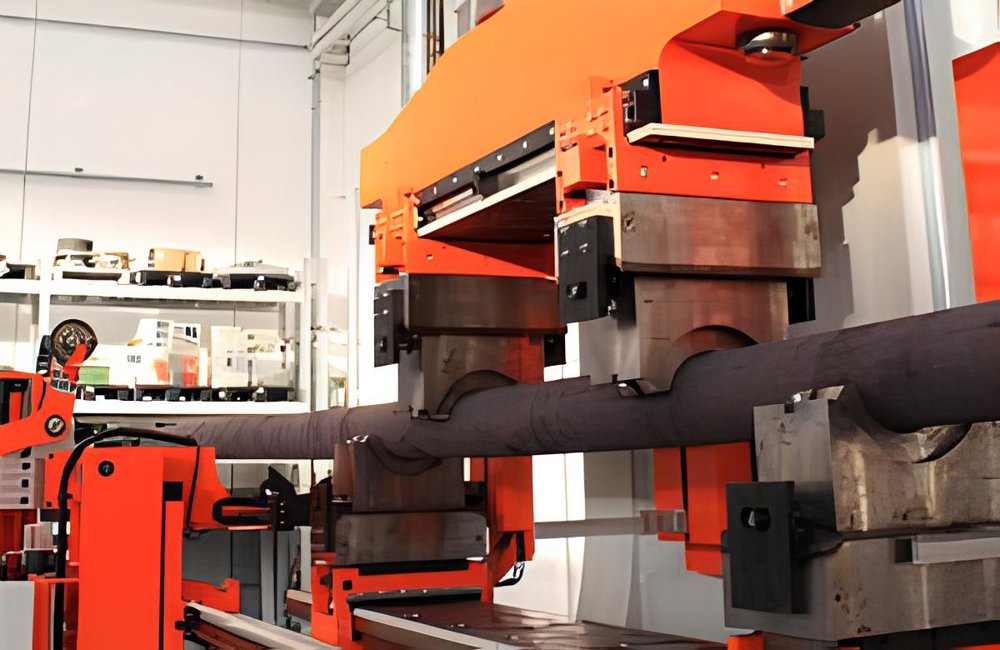
Tubes and piping can also be subjected to tensile tests according to ISO 6892-1. In this case, geometry, diameter and wall thickness require particular attention to specimen preparation and to the system used to grip the specimen correctly during the test.
Galdabini presents specific applications for tensile testing of tubes referring, in addition to ISO 6892-1, to other standards used in the sector, including ASTM A370, API 5L and ISO 3183. This highlights how, in industrial applications, test configuration must be evaluated not only in terms of material but also the product and the applicable technical standard.
The variety of metallic products that can be tested therefore shows why it is more accurate to speak of a testing system configured for the application, rather than of the machine alone. Frame, load capacity, grips, extensometers, accessories and software all contribute together to correct test execution.
Which Galdabini machines can perform tests according to ISO 6892-1
To perform a tensile test according to ISO 6892-1 it is necessary to use a universal testing machine appropriately configured according to the material, specimen dimensions, expected load and quantities to be measured. It is therefore not sufficient to consider only the machine's maximum capacity: gripping systems, force measurement, extensometry and software must all contribute to correct test execution.
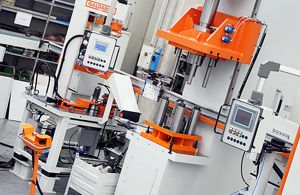
Galdabini develops universal testing machines (UTM) intended for tensile, compression, bending and other mechanical tests on materials. For metal applications, the company declares a range of solutions with capacities between 5 and 1,200 kN, configurable with different accessories and measurement systems according to the required test. ISO 6892-1 is explicitly among the standards indicated by Galdabini for tensile testing of metallic materials.
Quantum Mate for Automating Materials Testing
Quantum Mate is one of Galdabini’s solutions dedicated to test automation; it integrates a Quantum series universal testing machine with a 6-axis collaborative robot. The solution is compatible with Quantum models rated at 5, 10, 25, 50, and 100 kN and can be installed on existing machines without requiring changes to the laboratory layout.
The cobot automatically handles specimen movement, enabling the automation of loading and unloading operations and the execution of test sequences without continuous operator supervision. The system also includes features for sample traceability via a QR code reader and a measurement station.
Test management and results processing are handled by LabTest software, which controls data acquisition, processing, storage, and transmission.
Quantum Mate can also be configured for tensile testing of metallic materials; Galdabini’s documentation lists testing in accordance with ISO 6892 and ASTM E8 among the system's applications. The specific configuration is determined based on the specimen, required forces, grips, extensometry system, and applicable standard.
A range of machines configurable according to the test
Alongside servo-hydraulic solutions for higher loads, Galdabini offers universal testing machines with various capacities intended for the characterisation of different materials and components. The choice of solution must therefore start from the actual test conditions: material, specimen geometry, required force, deformation to be measured and applicable standard.
For this reason it is preferable not to automatically associate conformity with ISO 6892-1 to an entire family of machines without considering their configuration. A test on a thin wire, for example, may require different gripping and measurement systems than a test on a bar or on a specimen cut from a plate. The same applies to tubes and other products with specific geometries.
The Galdabini approach therefore allows configuring the testing system by combining machine, accessories, deformation measurement systems and software according to the application. In this way it is possible to build a solution consistent with the laboratory's needs and with the test method provided by the reference standard.
The role of the machine, extensometer and software in the ISO 6892-1 test
A tensile test according to ISO 6892-1 should be considered the result of a system in which multiple elements work together. The universal testing machine applies the load, the load cell measures its magnitude, the extensometer detects specimen deformation and the software manages the test and data processing. Correct configuration of these elements is fundamental to obtaining reliable results consistent with the method required by the standard.
The universal testing machine
The universal testing machine constitutes the frame within which the test is performed and must be chosen according to the application's characteristics. Load capacity, available space for the specimen, gripping systems and machine configuration must be suitable for the material and specimen type under tensile load.
Galdabini's range dedicated to materials testing includes machines with different capacities and configurations, enabling tests from specimens requiring relatively low forces up to metal applications with much higher loads. For tensile testing of metallic materials, Galdabini indicates solutions between 5 and 1,200 kN.
The load cell and force measurement
During the test it is necessary to know precisely the force applied to the specimen. This task is performed by the load cell, which converts the applied force into a signal measurable by the acquisition system.
Accuracy in force measurement is fundamental because several principal mechanical properties of the material are derived from these data. The load cell must therefore be appropriate for the test force range and be part of a correctly verified and calibrated system.
The extensometer and deformation measurement
If the load cell allows knowing how much force is applied, the extensometer enables measurement of how the specimen changes dimensionally during the test. It is by correlating load and deformation that the material's mechanical behaviour can be fully analysed.
There is no single technology suitable for every specimen. The choice depends on material characteristics, geometry and the quantities to be determined. Galdabini offers different extensometry systems and, for specific applications such as very thin metal wire testing, also indicates the use of video extensometers, which allow non-contact measurement.
Grips appropriate for the specimen
Grips also play a crucial role. The specimen must be held correctly throughout the entire test to avoid slippage or conditions that could alter the result.
Configuration varies according to the product being tested. Wires, sheets, bars and tubes have different geometries and may require specific gripping systems. For metal wires, for example, Galdabini indicates several solutions designed also to limit specimen slippage during tensile loading.
The LabTest software for test management
The system is completed by the software. Galdabini's universal machines use LabTest, developed for test programming and execution, result monitoring and management of acquired data. The software also enables processing, archiving and transfer of the information obtained during the test.
Integration between machine and software therefore allows overseeing the entire process, from test configuration to result analysis. This aspect is particularly important in standardised tests, where it is not only a matter of reaching specimen failure but of controlling test conditions and obtaining correctly measured and interpretable data.
To perform an ISO 6892-1 test it is therefore more appropriate to think in terms of a testing system: universal machine, force measurement, extensometry, grips and software must be chosen and configured according to the material, specimen and mechanical properties to be determined.
Why ISO 6892-1 is important for laboratories and industry
Having data on a metal's mechanical properties is useful only if obtained through a defined and reproducible method. This is one of the central aspects of ISO 6892-1: to establish an international reference for conducting tensile tests on metallic materials at ambient temperature, defining the method through which specific mechanical properties can be determined.
Adopting a standardised method therefore allows laboratories, companies and research centres to work according to shared criteria. The test result does not simply represent the behaviour observed on a single specimen, but becomes data obtained under defined conditions that can be used in material characterisation and evaluation activities.
Quality control of metallic materials
Tensile tests can be integrated into quality control processes to verify the mechanical properties of materials and metallic products. Values such as tensile strength, yield and elongation provide information on material behaviour under load and can be compared with the requirements specified for a given application.
This type of verification can concern incoming materials, semi-finished products or items destined for subsequent production stages. The availability of results measured according to a recognised method supports control of material characteristics and identification of any deviations from the required specifications.
Research, development and material characterisation
The tensile test is also an important tool in research and development activities. Knowing a material's mechanical behaviour makes it possible to compare different solutions, study the effect of manufacturing processes and treatments, and collect useful data during new product development.
For laboratories, universities and research centres, being able to configure the testing machine according to the material and specimen is therefore particularly important. Universal machines allow different types of tests to be performed by selecting the most appropriate accessories and measurement systems, making it possible to analyse different materials and applications.
Comparable results through a shared method
One of the main advantages of an international standard is the ability to define a common technical language. If tests are performed under established conditions, results can be interpreted knowing which method was adopted.
This aspect is particularly relevant in international industrial supply chains, where manufacturers, suppliers, clients and laboratories may be located in different countries. ISO 6892-1 provides a shared reference for tensile testing of metallic materials at ambient temperature, helping to make the determination of mechanical properties more consistent.
The correct configuration of the testing system
The application of the standard ultimately requires that the equipment be suitable for the test to be performed. Material, specimen geometry, required capacity, gripping systems and extensometry are all elements to be evaluated in system configuration.
This is where the value of having configurable universal machines arises. Galdabini develops solutions for materials testing that combine machine, accessories, measurement systems and software, allowing the most appropriate configuration to be identified in relation to the required test.
ISO 6892-1 therefore represents much more than a simple technical instruction on how to carry out a tensile test: it constitutes a common reference for standardised determination of mechanical properties of metallic materials, supporting quality control, characterisation, research and development activities.
ISO 6892-1 and other standards for tensile testing of metals
ISO 6892-1 is part of a family of standards dedicated to tensile testing of metallic materials. The choice of standard to apply depends on the conditions under which the test must be performed, the material, the product and any applicable technical or contractual requirements.
ISO 6892-1 specifically concerns tests carried out at ambient temperature. For tests conducted at different temperatures there are other parts of the ISO 6892 series, while in other industrial contexts compliance with different standards such as ASTM E8/E8M may be required.
What is the difference between ISO 6892-1 and ISO 6892-2?
The main distinction concerns the temperature at which the test is performed.
- ISO 6892-1:2019 defines the method for performing tensile tests on metallic materials at ambient temperature. This is the standard on which this article focuses and its current version was reviewed and confirmed by ISO in 2025.
- ISO 6892-2, on the other hand, concerns tensile tests carried out at temperatures higher than ambient. It is therefore intended to characterise metal behaviour when the test must reproduce elevated thermal conditions. In August 2026 the new edition ISO 6892-2:2026 was published, replacing the previous ISO 6892-2:2018.
The difference between ISO 6892-1 and ISO 6892-2 therefore does not simply consist of using two alternative procedures for the same test: one of the fundamental test conditions changes, namely the temperature at which the material is characterised.
Tensile tests at low temperature: ISO 6892-3
The series also includes ISO 6892-3, dedicated to tensile testing of metallic materials at low temperature. ISO 6892-3:2015 specifies the method for tests carried out at temperatures between +10 °C and -196 °C.
The ISO 6892 family thus allows tests to be distinguished also based on thermal conditions:
- ISO 6892-1: tensile tests at ambient temperature;
- ISO 6892-2: tensile tests at temperatures above ambient;
- ISO 6892-3: tensile tests at low temperature.
Test temperature must already be considered when configuring the equipment. Applications outside ambient temperature may indeed require specific devices to bring and maintain the specimen in the conditions specified during the test.
ISO 6892-1 and ASTM E8/E8M: what is the difference?
Another widely used reference for tensile testing of metals is ASTM E8/E8M. This standard also concerns tensile testing of metallic materials at ambient temperature and enables determination of properties such as yield strength, tensile strength, elongation and reduction of area.
ISO 6892-1 and ASTM E8/E8M therefore address the same general scope, but should not be considered interchangeable standards. They are distinct standards developed by different organisations, each with its own requirements regarding test execution, specimens and determination of results.
The choice between ISO 6892-1, ASTM E8/E8M or another standard therefore does not depend on the operator's preference, but on the requirements applicable to the material, the product, the sector and the specific testing activity. This also explains why a universal machine intended for metal testing must offer a high degree of configurability. The possibility of using different gripping systems, extensometers, accessories and test methods enables adaptation of the system to various standards and to the characteristics of the specimen to be analysed.
FAQ on ISO 6892-1
To which materials does ISO 6892-1 apply?
The standard applies to metallic materials. Tests can be performed on specimens obtained from different products, including sheets and metal plates, bars, sections, wires, tubes and piping. Product geometry influences specimen preparation and the machine configuration necessary to correctly perform the test.
What is the difference between ISO 6892-1 and ISO 6892-2?
The main difference is the test temperature. ISO 6892-1 concerns tensile testing of metallic materials carried out at ambient temperature, while ISO 6892-2 defines the method for tests performed at temperatures higher than ambient.
Which machine is required to perform a test according to ISO 6892-1?
A universal testing machine configured according to material, specimen geometry and dimensions, expected forces and properties to be measured is required. The machine must be paired with appropriate gripping and measurement systems. For tensile testing of metals, Galdabini offers solutions with different load capacities so the system can be configured based on the application.
What is the purpose of the extensometer in the ISO 6892-1 test?
The extensometer is used to measure the specimen's deformation during the tensile test. This measurement is necessary to determine specific mechanical properties of the material. Depending on the application, different technologies can be used, including non-contact systems such as video extensometers.
Can ISO 6892-1 be used for tensile testing of tubes?
Yes. ISO 6892-1 can be applied to specimens obtained from metal tubes and piping. The product's particular geometry however requires suitable preparation and gripping systems. Depending on the tube characteristics, the test can be performed using either a tubular segment or a specimen taken from the tube.
What is the difference between ISO 6892-1 and ASTM E8/E8M?
Both standards concern tensile testing of metallic materials at ambient temperature, but they are distinct standards and have specific requirements for test execution and determination of mechanical properties. They should not be considered automatically equivalent or interchangeable. The applicable standard depends on technical specifications, the product and the requirements for the test.
Which Galdabini machines can perform tests according to ISO 6892-1?
Galdabini manufactures configurable universal testing machines for tensile testing of metallic materials. Model selection depends primarily on the required force, the type and dimensions of the specimen, necessary grips and the extensometry system. For this reason it is more appropriate to identify the configuration suitable for the specific test rather than associating ISO 6892-1 indiscriminately with all machines in the range.