Corporate
Hydraulic presses for the medical sector: precision and reliability in production processes

06/04/2026
In the medical sector, the manufacture of components and equipment requires extremely high quality standards, where precision, repeatability and process control are indispensable elements. The production of parts intended for critical devices and applications requires the use of advanced technologies capable of ensuring consistent results even on complex materials and high-precision operations.
The hydraulic presses represent a fundamental solution for managing stamping and drawing processes with the highest level of control. Thanks to their ability to accurately regulate force, speed and stroke, these machines enable the production of reliable components that comply with regulations, directly contributing to the quality and safety of the final product.
The role of hydraulic presses in the medical sector
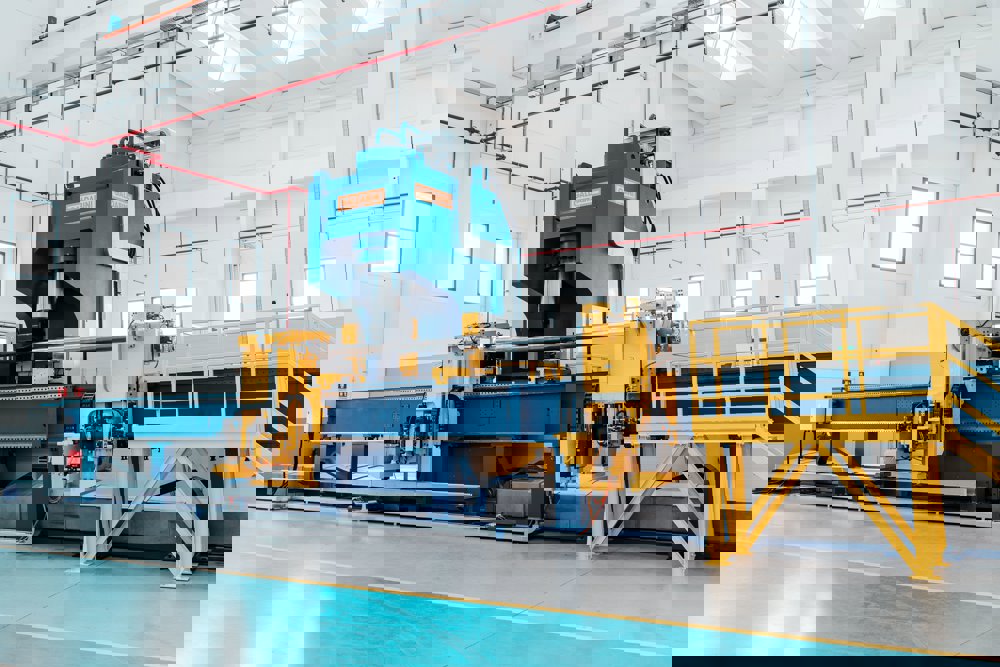
The hydraulic presses play a central role in the production processes of the medical sector, particularly in operations that require high precision and control, such as stamping and deep drawing of metal components. These are fundamental operations for the production of parts intended for critical applications, including containers for sterilized instruments, organ transport systems and sterilization chambers.
The materials used in these contexts, such as aluminum, stainless steel, titanium and special alloys, require extremely controlled processing. Hydraulic presses allow precise management of material deformation, ensuring uniformity throughout the process and guaranteeing the quality of the final product.
The production requirements of the medical sector
The medical sector imposes some of the most stringent production requirements in industry. The manufacture of components intended for critical devices and equipment requires not only high quality standards, but also an extremely rigorous management of the entire production process.
One of the main aspects concerns the processing of complex materials such as aluminum, stainless steel, titanium and special alloys. These materials, often used to produce containers for sterilized instruments, sterilization chambers or systems for organ transport, must undergo processes such as deep and ultra-deep drawing while maintaining extremely tight tolerances.
In addition, there is the need to ensure a high surface quality. After processing, components undergo specific treatments such as anodizing for aluminum or mirror polishing for stainless steel, processes that require controlled deformation free from structural defects.
Furthermore, process traceability and repeatability of operations are fundamental elements. Every phase must be monitored and documented, a prerequisite for compliance with medical sector regulations. Hydraulic presses therefore do not merely perform a processing step, but represent a key tool to ensure reliability, safety and traceability in production processes.
Applications of hydraulic presses in the medical sector
Hydraulic presses find application in numerous production processes within the medical sector, particularly in the manufacture of components obtained through stamping and deep drawing. These are essential processes for producing metal parts intended for critical applications, where precision and surface quality are indispensable.
Main applications include the production of containers for sterilized medical instruments, systems for organ transport, sterilization chambers and other components used in healthcare. These items, made from materials such as aluminum, stainless steel or special alloys, must ensure strength, reliability and perfect surface finish.
Hydraulic presses make it possible to control every phase of the deformation process, ensuring part uniformity and reducing the risk of defects. This is particularly important in deep drawing operations, where the material's behavior must be monitored precisely to avoid issues such as cracking or uncontrolled deformations.
Thanks to their versatility, hydraulic presses therefore represent an ideal solution for managing complex and highly specialized applications, directly contributing to the quality and safety of medical products.
Hydraulic presses for deep drawing in medical applications
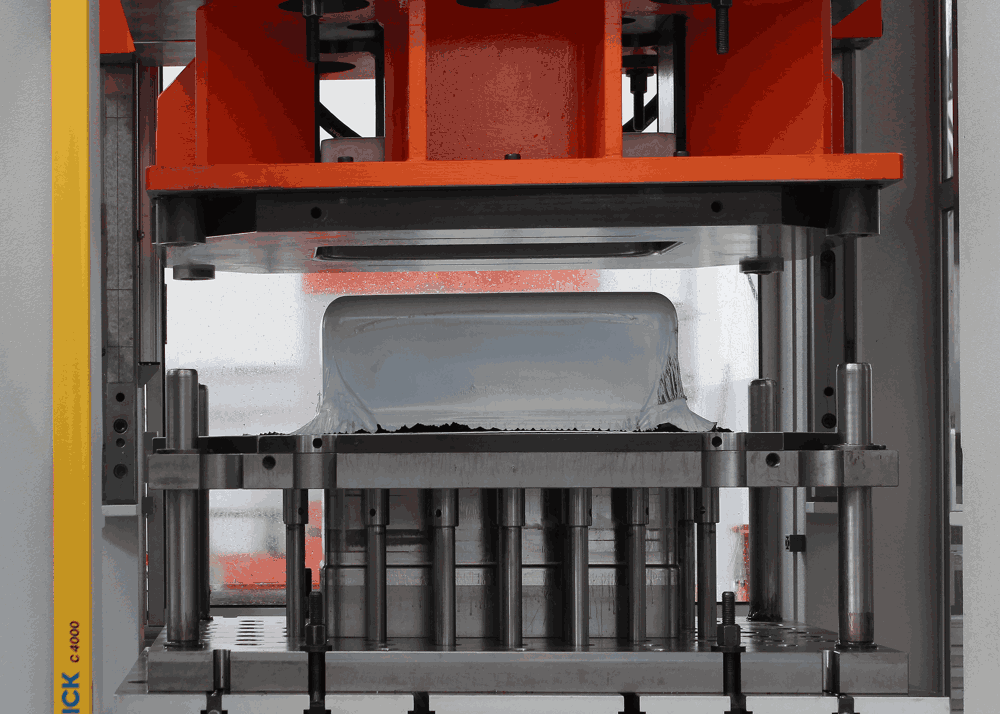
Deep and ultra-deep drawing are among the most critical processes in the medical sector, as they require extremely precise control of material deformation throughout all stages of processing. The hydraulic presses offer a significant advantage thanks to their ability to accurately manage force, speed and stroke.
One of the fundamental aspects is the control of forming speed, which can be continuously adjusted over a wide range, typically between 1 and 100 mm/s. This capability allows the process to be adapted to the specific characteristics of the material, reducing the risk of defects and ensuring uniform deformation.
At the same time, continuous monitoring of the applied force and the force absorbed by the part makes it possible to observe the material's behavior in real time during processing. This approach helps to prevent crack formation and to detect any anomalies related to the properties of the material used.
These technologies, already successfully adopted in highly demanding sectors such as aerospace, find particularly relevant application in the medical field. In some cases, in addition to deep drawing, advanced processes such as elastomer forming can also be integrated, further expanding production possibilities.
Hydraulic presses for deep drawing thus represent an indispensable solution to ensure precision, control and reliability in the manufacture of complex medical components.
Galdabini solutions for the medical sector
In the medical sector, Galdabini develops hydraulic presses designed to manage deep drawing and stamping processes with the highest level of precision and control. The approach is focused on the delivery of complete solutions, able to guarantee repeatable, traceable processes that are perfectly integrated within the production line.
A distinctive element is the possibility to provide turnkey systems, which include not only the hydraulic press but also the dies and automation for part loading and unloading. This allows optimization of the entire production cycle, reducing implementation times and ensuring more efficient process management.
Particular attention is paid to the machine design, from the selection of components to material processing, up to finishes and ergonomics. The objective is to facilitate process control operations and enable the collection and analysis of forming parameters for each individual part, thus ensuring complete traceability.
Thanks to advanced control systems, the Galdabini hydraulic presses allow continuous monitoring of operating conditions, ensuring process stability and quality even in the most complex operations. This makes the solutions particularly suitable for a sector such as medical, where reliability and precision are fundamental requirements.
Turnkey solutions for the medical sector
The Galdabini hydraulic presses for the medical sector also stand out for the ability to deliver turnkey solutions, designed to meet specific production needs and ensure maximum process efficiency.
One example concerns the production of aluminum sterilization containers. In this case, the solution provides a 120-ton hydraulic press with platens of 1200 x 1000 mm, paired with a set of dies for the manufacture of rectangular tubs available in different sizes (L, M, XL) and configurable in multiple height variants. This allows production to be adapted to different needs while maintaining high quality standards.
Another application concerns the production of cylindrical sterilization autoclaves in stainless steel 316L. The solution is based on a 400-ton hydraulic press, equipped with high operational speed, and on a set of three-stage sequential dies for the production of the autoclave body. The process allows working with substantial material thicknesses, up to 3 mm, and obtaining components with heights up to 500 mm, ensuring precision and quality.
Finally, for the production of sterilization containers in stainless steel 304, Galdabini proposes a configuration with a 600-ton hydraulic press and platens of 2000 x 1600 mm, paired with a set of dies for rectangular tubs in different versions. This solution allows managing production on a larger scale while maintaining constant process control.
These examples demonstrate how hydraulic presses can be flexibly configured to meet various applications in the medical sector, offering complete solutions that integrate machine, dies and automation.
Innovation and control in medical processes
In the medical sector, the quality of the final product is closely linked to control of the production process. Hydraulic presses represent a fundamental tool to ensure stability, precision and traceability, elements indispensable in a context where every component must meet extremely rigorous standards.
The evolution of stamping and drawing technologies now makes it possible to manage complex operations with ever higher levels of control. The ability to continuously monitor parameters such as force, speed and material behavior helps to prevent defects, optimize the process and improve overall production quality.
The Galdabini hydraulic presses are configured as advanced solutions for the medical sector, capable of integrating mechanical precision, automation and data management. An approach that enables companies to face production challenges with greater confidence, ensuring reliability and compliance with required standards.